Showing posts with label French vocabular;keyphrases;French tuition;beginner French;learn French; French tuition; French teacher; intensive French. Show all posts
Thursday, 22 February 2018
Flu and cold season - Talk about illness in French
Comment ça va? How are you?
Je suis malade: I'm ill
J'ai un rhume: I have a cold
J'ai la grippe: I have the flu
Important cultural note: the word flu - for my French mind - is over-used in England. In France, la grippe is only when you are in bed and can't move. If you're at work or can do things, you don't have la grippe).
J'ai été malade/au lit pendant une semaine: I was ill/in bed for a week
Qu'est-ce que tu prends? What are you taking?
Tu as vu un médecin/un docteur? Have you seen your GP?
Bon rétablissement: Get well soon
Je prends: I take...
Je suis mort/kaput: I'm dead
Je ne peux plus bouger: I can't move
J'ai été hospitalisé/e: I've been hospitalized
Je suis allé/e/j'ai dû aller aux urgences: I had to go to A & E
Tu as un mouchoir? Do you have a tissue?
J'ai été en congé maladie pendant une semaine: I was off work for a week
Le congé maternité: Pregnancy leave
La carte vitale: the Sécurité sociale (French NHS) card French people present to their doctor/specialist/chemist, which allows a free or reduced rate consultation/free or reduced rate medicine, depending on your mutuelle (private insurance). If you don't have one, you will be looked at as if you're an alien.
What phrases/words would you like me to add on this post?
http://www.voulezvousparler.com/
Tuesday, 20 February 2018
Top 10 French phrases to know
1. Il y a/il y aura/il y avait: There is/there will be /there was/were
2. Comment? How?
3. Comment on dit... en français? How do you say... this in French?
4. Comment est-ce que ça se prononce? How do you say it ?
5. J’ai besoin de ...I need...
6. Ca te plaît ? Do you like it?
7. Ca te dit? Do you fancy it?
8. Tu as envie de...? Do you feel like...?
9. Je n’arrive pas à m’en souvenir : I can’t remember.
10. C’est logique : it makes sense.
What are yours? Quelles sont les vôtres?
Monday, 5 February 2018
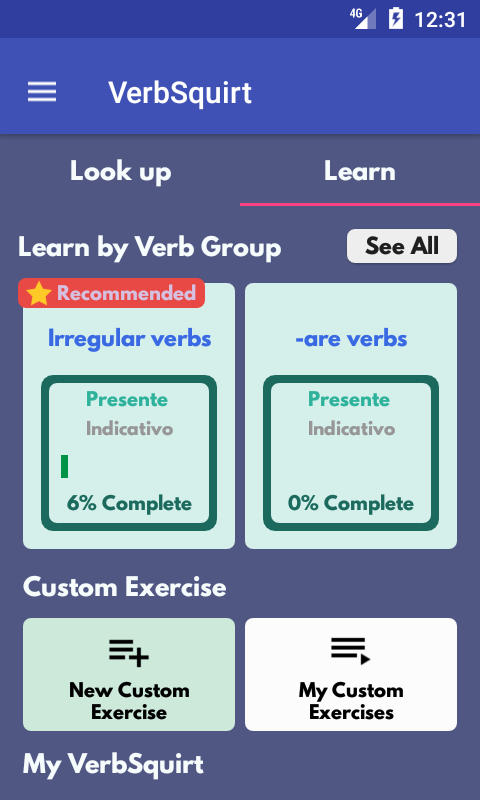
Do you want to be more efficient with your French verbs? VerbSquirt French
Here is an app one of my students loves:
A fun and rewarding activity app to practise your French verbs:
http://www.lifehack.org/377243/science-says-silence-much-more-important-our-brains-than-thought
Have you tried it? What do you think? Reply in the comments section.
A fun and rewarding activity app to practise your French verbs:
http://www.lifehack.org/377243/science-says-silence-much-more-important-our-brains-than-thought
Have you tried it? What do you think? Reply in the comments section.
Thursday, 25 January 2018
False friends in French
These are some false friends:
These are mistakes made by the French and English learners:
Actually= en fait
Actuellement= at the moment/nowadays
Actually, I might not come to the party tonight.
Actuellement, il y a une inquiétude par rapport à Brexit.
eventually: finalement
éventuellement: might/may/possibly/potentially
Je vais éventuellement travailler là-bas. I might work there.
Assister à : to attend
aider: to help/assist
Sûrement: probably
Forcément: surely
Sensible: sensitive
Raisonnable: sensible
Une librairie: a bookshop
Une bibliothèque: a library
Un résumé: a summary
résumer: to sum up
reprendre: to resume
These are mistakes made by the French and English learners:
Actually= en fait
Actuellement= at the moment/nowadays
Actually, I might not come to the party tonight.
Actuellement, il y a une inquiétude par rapport à Brexit.
eventually: finalement
éventuellement: might/may/possibly/potentially
Je vais éventuellement travailler là-bas. I might work there.
Assister à : to attend
aider: to help/assist
Sûrement: probably
Forcément: surely
Sensible: sensitive
Raisonnable: sensible
Une librairie: a bookshop
Une bibliothèque: a library
Un résumé: a summary
résumer: to sum up
reprendre: to resume
Wednesday, 24 January 2018
French - frequent mistakes
Frequent mistakes made by students:
J'espère que tu as/as eu un bon weekend/anniversaire.
You should say/vous devriez dire: j'espère que tu as passé un bon weekend/anniversaire.
Je ne pense pas il y a...Vous devriez dire: 'je ne pense pas qu'il y ait...' (I don't think there is/are...)
Je suis confident que...Vous devriez dire: (selon le contexte/depending on context) Je suis sûr(e) que.../je pense que.../Je pense que cela va marcher.
J'ai acheté pas...(to say: I bought (absolutely) no...) Je n'ai acheté aucun...+ nom
Je ne peux pas ouvrir la porte - non. Dire/say: je n'arrive pas à ouvrir la porte.
Je n'arrive pas à le joindre....What do you think this means?
I can't reach him.
Tuesday, 2 January 2018
2018 - Résolutions en français
French practice
How do the French write their resolutions? Here are some examples:
1. Arrêter de fumer/la viande/le gluten/le rhum/le sucre (au choix)
2. Faire 20 minutes d'espagnol par jour (un mélange de lecture/ apprendre 2-5 mots par jour/ écouter 5 minutes d'un podcast/regarder une vidéo/un film dans la langue apprise).
3. Méditer tous les matins
4. Moins/plus voyager.
5. Moins consommer.
http://www.rtl.fr/culture/lifestyle/comment-arreter-de-surconsommer-7787858032
6. Aller au travail à vélo.
7. Devenir vegan après la naissance du bébé.
8. Passer plus/moins de temps avec mes enfants/mon homme/ma femme/mes amis/mon coach/ma prof/mon jardin/tapis de yoga/livres.
9. Aller marcher/courir au moins 10 minutes par jour.
10. Avoir de la gratitude, tous les jours, pour ce qui va bien et toutes ces petites choses qui nous rendent heureux.
Quelles sont vos résolutions pour cette année?
http://www.rtl.fr/actu/bien-etre/un-sourire-peut-il-tout-changer-7791443241
Photo credits; Sophie Marette
Saturday, 21 October 2017
French common mistakes for English learners
These are my notes from a lesson I had on Friday with an advanced student, who has such fluency and speed that she can make basic mistakes.
un criminel = un délinquant
Un criminel is someone who has killed somebody
J'espère qu'il n'attend pas....(I hope he's not waiting): I hope he doesn't expect...
J'espère qu'il ne s'attend pas à ce que...+ subjonctif
J'espère qu'il ne s'attend pas à ce que j'arrive demain.
I hope he doesn't expect me to arrive tomorrow.
Dans tout le monde = dans le monde entier
extra = un supplément
On m'a demandé un supplément = I was charged extra.
Contente avec = contente de
Je suis contente de mon choix
Il estun caméraman - there is no article before professions.
Elle est prof
Elle est avocate
Elle est juge
un plan = un projet
un plan = une carte = a map
Elle a pris l'examen = elle a passé l'examen
She took the exam
Elle a réussi/eu l'examen = she passed the exam (school)
Il n'y a pas deparking = il n'y a pas de place (de parking)
Le stationnement = parking
un parking = a car-park
Un criminel is someone who has killed somebody
J'espère qu'il ne s'attend pas à ce que...+ subjonctif
J'espère qu'il ne s'attend pas à ce que j'arrive demain.
I hope he doesn't expect me to arrive tomorrow.
On m'a demandé un supplément = I was charged extra.
Je suis contente de mon choix
Il est
Elle est prof
Elle est avocate
Elle est juge
un plan = une carte = a map
Elle a
She took the exam
Elle a réussi/eu l'examen = she passed the exam (school)
Il n'y a pas de
Le stationnement = parking
un parking = a car-park
Labels:
A2 French,
French,
French grammar,
French lessons,
French vocabular;keyphrases;French tuition;beginner French;learn French; French tuition; French teacher; intensive French,
GCSE French
Subscribe to:
Posts (Atom)